You do not have to gut a house to create real value in Arcadia Lite. The right lot, smart floor plan tweaks, and a few targeted upgrades can move a property into a higher comp set. If you are an investor or a move-up buyer, you want a playbook that balances design with disciplined underwriting. This guide shows you what to look for, what to improve, and how to navigate Phoenix permits so your remodel pays off. Let’s dive in.
Arcadia Lite at a glance
Arcadia Lite is the Arcadia-adjacent corridor in Phoenix, generally between 32nd and 44th Streets with north-south edges that vary by map. It offers the Arcadia lifestyle at a lower entry price than Arcadia Proper. Because definitions vary by source, confirm the exact neighborhood tag and comps for each address you consider.
Most homes sit within the City of Phoenix, so city permitting and zoning rules apply. Some edges may touch other municipalities, so always verify the city for a specific parcel before you plan scope or timelines.
What drives upside on these lots
Lot size, setbacks, and overlays
Many Arcadia Lite lots are in the 6,000 to 10,000 square foot range, so setbacks and easements matter. Before you plan an addition, confirm buildable area and any special design rules. Parts of the Arcadia corridor have overlay standards that affect walls and street-facing design. Review the Arcadia/Camelback special planning text before you propose big structures or expansions. You can find overlay standards in the City of Phoenix code at the Arcadia/Camelback section. See the Arcadia/Camelback overlay text.
Canals and drainage easements
Canal corridors are a neighborhood asset, but canal and drainage easements can limit where you build. Check for recorded easements and coordinate with the city and utilities early in design. Your survey and title report should flag these items.
Trees, irrigation, and yards
Arcadia’s mature trees and irrigated yards add appeal. They can also add cost if roots impact foundations or if irrigation needs upgrades. If you plan new hardscape, pools, or patios, budget for tree protection and irrigation adjustments.
Parking and garages
Local buyers value off-street parking and two-car garages. Removing a garage to gain interior square footage can hurt resale. If you must convert a carport or rework the driveway, keep functional parking at the top of your plan.
Utilities and tie-ins
Locate your sewer lateral, water meter, gas line, and main electrical panel early. Adding a pool, EV charger, ADU, or multi-slide doors can push electrical capacity. Moving panels or upsizing service requires permits and can affect timelines. Review residential permit workflows on the city portal. Check Phoenix residential permit steps.
Floor plans and systems buyers reward
Create indoor-outdoor flow
Many Arcadia Lite homes began as mid-century ranch plans with smaller rooms. The best remodels open the kitchen to a family space and add wide sliders to a shaded patio. Buyers respond to a large island, clean neutral finishes, and a comfortable primary suite with a modern bath and closet.
Update the invisible systems
The systems you cannot see often decide the deal. Budget for roof repairs, right-sized HVAC, panel capacity, sewer line condition, and window upgrades. These items compete with flashy finishes in the buyer’s mind because they lower future risk and operating costs.
Be surgical with structural changes
Opening load-bearing walls or moving plumbing stacks usually needs an engineer, plans, and permits. Those steps add time and soft costs. If the numbers are tight, focus on a lighter kitchen refresh, improved lighting, and new surfaces before a major reconfiguration. Local cost ranges can vary widely, so use scope-based bids rather than a single price per square foot. See a Phoenix remodel cost overview.
Remodels that tend to pay in Arcadia Lite
Quick, high-lift upgrades
Small updates can punch above their weight and help you reposition your home in the search results. Think paint inside and out, landscape refresh, updated hardware and fixtures, and a new garage door or steel entry door. Phoenix Cost vs Value data shows garage and entry door replacements often recoup more than their job cost in this region. Review Phoenix Cost vs Value data.
Kitchens and baths
A minor to midrange kitchen remodel often delivers the best balance of cost and buyer impact. Keep the layout, refinish or reface cabinets, add quartz counters, swap appliances, and upgrade lighting. Midrange bathroom remodels also perform well, especially when you convert dated baths into clean, spa-like spaces. See ROI ranges by project type.
Outdoor living and shade
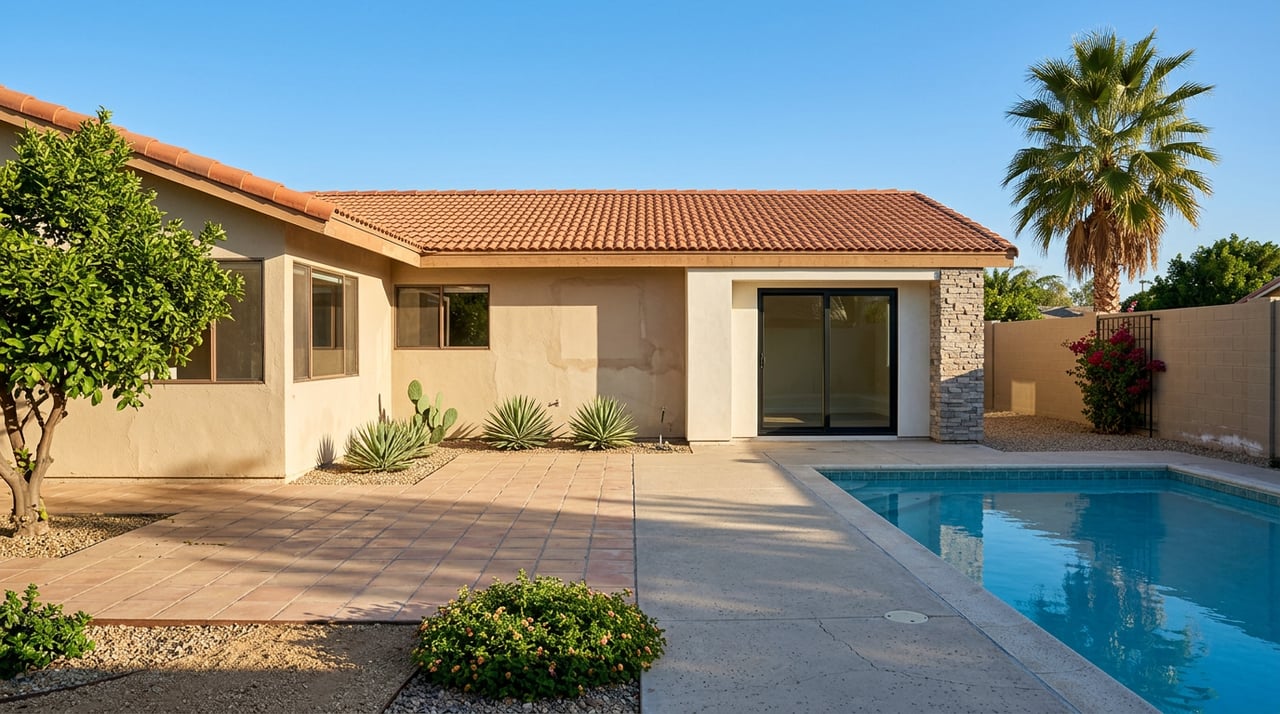
In Phoenix, usable shade is real square footage. A covered patio, improved hardscape, and a simple outdoor kitchen help your interiors live bigger. Installed costs vary by material and size, but local guides show wide ranges for patio covers. Get a sense of patio cover costs.
Site-dependent plays to underwrite carefully
Pools
Pools can increase buyer appeal in warm climates, but financial recoup depends on price tier and comparables. In higher-end Arcadia corridors, a well-executed pool and yard often belong in the comp set. Model ROI case by case, using updated local comps and current build costs. Learn how analysts estimate pool value.
ADUs and casitas
Arizona’s ADU law, HB2720, requires larger cities to allow an attached and a detached ADU with local siting limits. In Phoenix, that can improve both lifestyle flexibility and income potential. Underwrite ADUs with realistic build costs, utility tie-ins, and parking. Verify short-term rental rules and any owner-occupancy standards before you model revenue. Read Arizona HB2720.
Second stories and full rebuilds
Major additions and new builds can work in Arcadia Lite, but they carry higher capital and time risk. Underwrite to the neighborhood price ceiling for your block and lot band. Plan for full design review and neighbor outreach when you go big, and do not proceed without tight exit comps.
Underwriting steps before you write the offer
Use this quick due-diligence list to avoid surprises and protect your margin:
Confirm parcel city and zoning. Many addresses are City of Phoenix. Verify jurisdiction and development standards before you price your scope.
Pull tight comps. Focus on the same micro-area, lot size band, and finished quality within the last 6 to 12 months. Use MLS agent comps for accuracy and triangulate aggregator medians only as a cross-check.
Check permit history. Unpermitted work can blow up timelines and budgets. Start with city permit records and neighborhood resources on nonpermitted construction. See neighborhood guidance on nonpermitted work.
Build a scope-based budget. Line-item hard costs, soft costs, utility tie-ins, site work, and a 10 to 20 percent contingency for remodels in Phoenix. Avoid a simple price per square foot. Validate with local contractor bids.
Plan for fees and timing. Add impact fees and plan review time to your schedule and carrying costs. Phoenix publishes process tools and fee estimates. Review SHAPE PHX permit process and check impact fee estimates.
Verify your contractor. Confirm license, bond, and insurance with the Arizona Registrar of Contractors. Do not hire unlicensed contractors. See ROC enforcement news and resources.
Typical Phoenix remodel timeline
Every scope is different, but most projects move through a few clear stages. Planning and permits can take 2 to 8 weeks depending on complexity and reviewers. Demolition and structural work often run 2 to 6 weeks, followed by 1 to 3 weeks of systems rough-ins, then 2 to 6 weeks of finishes. Full-gut projects often take 3 to 6 months from permit to final. Build in time for inspections, utility coordination, and lead times. For more on plan submittals and workflows, start with the city’s SHAPE PHX portal. Explore the SHAPE PHX portal.
Arcadia Lite features that help resale
- Strong indoor-outdoor flow with multi-slide or slider doors.
- A shaded, furnished patio that reads like another room.
- Updated systems: HVAC, roof, windows, electrical panel, and sewer.
- A modern, neutral kitchen with a generous island and quality appliances.
- A comfortable primary suite with a clean bath and organized closet.
- Off-street parking and a two-car garage when possible.
How we help you buy or sell with confidence
You deserve calm, strategic guidance when you invest in a remodel or prepare a listing. Our team pairs local expertise with a disciplined, ROI-focused process. For buyers and investors, we help source opportunities, validate comps, coordinate pre-bids, and navigate Phoenix permits. For sellers, we use Compass Concierge, staging, and high-impact pre-sale updates to lift your net proceeds. If you are considering a project or a sale in Arcadia Lite, let’s talk about a plan that fits your goals with no pressure. Connect with AB Residential for a private consultation.
FAQs
What is Arcadia Lite and how is it different from Arcadia Proper?
- Arcadia Lite is the Arcadia-adjacent corridor in Phoenix with smaller average lots and a lower entry point than Arcadia Proper; verify the exact neighborhood and comps for each address because boundaries vary by source.
Do I need a permit to open walls or add sliders in Phoenix?
- Yes. Structural changes and large openings typically require plans, engineering, and permits through the City of Phoenix; start with the SHAPE PHX portal for submittal paths and timelines.
How much value can a pool add in Arcadia Lite?
- It depends on your price tier and comps; pools often boost appeal, but ROI varies, so model costs and resale using matched local comparables and current build pricing before you commit.
Can I build an ADU on my Arcadia Lite lot?
- Arizona’s HB2720 requires larger cities to allow ADUs with local siting limits; confirm Phoenix standards for size, setbacks, parking, and any STR rules before underwriting rental income.
Which quick upgrades deliver strong ROI before listing?
- Curb appeal, paint, updated fixtures, and especially new garage and steel entry doors tend to perform very well in Phoenix according to regional Cost vs Value data.
How long does a typical remodel take in Phoenix?
- Many projects run 3 to 6 months from permit to final; plan 2 to 8 weeks for planning and permits, then 5 to 15 weeks for demo, systems, and finishes depending on scope and inspections.