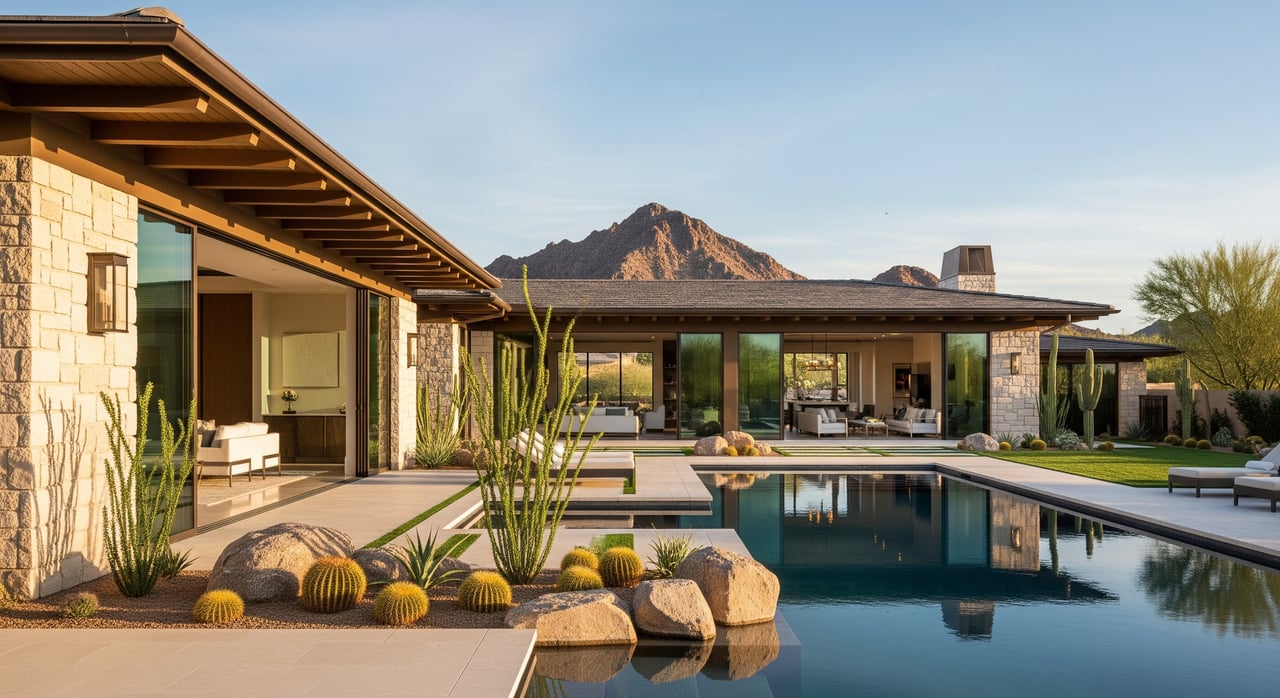
Buying a $1M-plus home in Paradise Valley Village and wondering how jumbo financing fits your plan? You are not alone. In this pocket of Phoenix, many beautiful properties sit above standard lending limits, which means your mortgage works a bit differently. In this guide, you’ll learn what counts as a jumbo loan locally, what lenders expect, how rates and appraisals behave for luxury homes, timing compared with cash, and the steps to move forward with confidence. Let’s dive in.
What counts as a jumbo here
A jumbo loan is any mortgage that exceeds the conforming loan limit set by the Federal Housing Finance Agency. Because these loans sit above that limit, they cannot be purchased by Fannie Mae or Freddie Mac and are underwritten and priced differently.
Conforming limits are set by county and change every year. Paradise Valley Village sits in Phoenix within Maricopa County, so you should check the current FHFA conforming loan limit for Maricopa County before you quote a number. If your intended loan amount is above the county limit, you are in jumbo territory.
In Paradise Valley Village, many single-family homes sell above $1M. If you plan to finance a portion of that price and your loan amount exceeds the county limit, you will likely use a jumbo mortgage.
What lenders look for on jumbo loans
Jumbo programs usually ask for stronger profiles than standard conforming loans. Exact rules vary by lender, but these are common norms.
Credit, income, and debt-to-income
- Many lenders prefer credit scores in the mid-700s or higher for best pricing. Minimums vary by program.
- Debt-to-income is often capped near 43 to 45 percent. Some lenders allow higher DTIs when you have strong compensating factors like very low loan-to-value or significant reserves.
Down payment and loan-to-value
- Primary residence: 10 to 20 percent down can be possible for well-qualified borrowers. Many lenders price most favorably at 20 percent or more down.
- Second homes and investment properties: higher down payments are common, often 20 to 30 percent or more, with higher rates than primary homes.
- Super-jumbo loans: very large loan amounts usually come with larger required down payments and tighter rules.
Reserves and asset seasoning
- Expect required cash reserves measured in months of principal, interest, taxes, and insurance. Six to twelve months is common on larger loans, and second homes or investment properties can require more.
- Lenders want a clear paper trail on funds used for your down payment and reserves. Recent large deposits will need documentation.
Documentation you should expect
- Two years of federal tax returns. Include business returns and a year-to-date profit and loss if you are self-employed.
- Recent pay stubs, W-2s, and any 1099s.
- Bank, brokerage, and retirement statements with a 60 to 90 day history on accounts tied to the transaction.
- Gift funds may be allowed for primary residences, but you will need gift letters and source documentation. Gifts are usually treated differently for reserve requirements.
Portfolio and non-QM options
Some banks keep jumbo loans on their own balance sheet or offer non-QM programs designed for complex income, asset depletion, trust distributions, or unique properties. These can provide flexibility, but pricing and underwriting vary widely.
Your prep checklist
- 2 years federal tax returns and all schedules.
- 2 years business returns and a year-to-date profit and loss if self-employed.
- 30 to 60 days of statements for all asset accounts and recent retirement statements.
- Recent pay stubs and W-2s.
- Explanations and documentation for any large deposits.
- Property items as needed: HOA documents, leases if applicable, and property tax statements.
Rates and how jumbo pricing works
Jumbo rates are set by lenders and private investors, not by the government-sponsored enterprises. That structure makes rate behavior a bit different from conforming loans.
- Key drivers include Treasury yields, lender funding costs, investor appetite for non-agency mortgages, and your credit profile.
- For top-tier borrowers, jumbo rates can be similar to conforming pricing. When markets are volatile or credit profiles are weaker, the spread can widen.
- Fixed-rate jumbos provide stable payments and often come with longer lock options. Adjustable-rate mortgages can offer lower initial rates, which may be attractive if you plan to sell or refinance in a few years, but they carry reset risk.
- Rate locks cost more for longer periods. A 60-day lock can be pricier than a 30-day lock. Some lenders offer float-down options if rates improve after you lock.
Factors that usually help pricing include higher credit scores, lower loan-to-value, larger documented assets, and primary-residence occupancy. Rates move daily, so compare options across a few experienced jumbo lenders.
Appraisals for luxury homes in Paradise Valley Village
High-value and one-of-a-kind properties often face valuation complexity.
- Comparable sales can be limited. Appraisers may need to widen the search in time or geography.
- Unique amenities matter. Lot size, views, custom pools, outdoor kitchens, and high-end finishes require careful adjustments.
- Recent renovations can be hard to price if they are highly customized. Market value may not match replacement cost.
- Some lenders request a review or second appraisal when the value is uncertain or when the loan-to-value is high.
Practical tips: order the appraisal early and work with an appraiser familiar with Phoenix luxury and Paradise Valley-area comps. If value comes in low, you can provide additional comparables, request a second appraisal, increase your down payment to meet program LTV, renegotiate price, or exit if your contingencies allow.
Property condition and insurance
Older luxury homes can need repairs. Lenders and insurers may require fixes to roofing, structural, or mechanical systems before closing. Special hazards or flood risks can affect insurance availability and cost, which can flow through to underwriting. Build a buffer in your timeline for any required repairs or insurance approvals.
Timing, cash vs financing, and strategy
Jumbo loans take longer than standard conforming mortgages, and that timing shapes offer strategy.
- Expect 30 to 45 days for a typical jumbo purchase in Paradise Valley Village. Complex income or unique properties can extend timelines to 45 to 60 days.
- Cash closings can happen in 7 to 14 days since there is no appraisal or underwriting contingency. That speed adds leverage in competitive situations.
Choosing cash or financing
- Negotiation strength: cash is simpler and faster, which sellers like. A strong pre-approval and proof of funds can make a financed offer competitive.
- Liquidity and opportunity cost: financing preserves capital for investments or other uses. Your decision depends on expected returns, tax considerations, and personal liquidity needs.
- Tax considerations: mortgage interest deductibility has limits that depend on when the loan originated and how much acquisition debt you carry. Speak with your tax advisor about current rules.
Bridge and interim options
If you need flexibility, tools like bridge loans, home equity lines of credit, or construction loans can help. Rates and terms vary and can be higher than standard mortgages. Portfolio lenders sometimes offer tailored interest-only or bridge structures for high-net-worth clients.
Winning in Paradise Valley Village
A clear plan and realistic timeline help your offer shine.
- Get fully pre-approved, not just pre-qualified, with a lender that does a high volume of large jumbos.
- Coordinate appraisal and inspections early. Share any unique property features with your lender so they can plan for valuation and underwriting.
- Build extra time for title review, HOA documents if applicable, and any lender or insurer-required repairs.
- Consider when to lock your rate based on underwriting progress and market conditions. Ask about float-downs if you are worried about timing.
- Present clean, complete offers with proof of funds for your down payment and reserves.
Quick buyer checklist
Before you shop
- Secure a formal jumbo pre-approval.
- Organize 2 years of tax returns, bank and brokerage statements, and explanations for large transfers.
- Review property tax histories for homes you are considering.
When you make an offer
- If financing, include a realistic close date that accounts for appraisal and underwriting.
- If buying with cash, include proof of funds and your preferred closing window.
Once under contract
- Order the appraisal quickly and request an appraiser familiar with Paradise Valley and Phoenix luxury comps.
- Respond to lender documentation requests promptly.
- Plan for reserve requirements and any repairs needed by lenders or insurers.
Work with a calm, local advisor
Buying in Paradise Valley Village is a high-stakes decision. The right partner helps you set a strategy, structure a competitive offer, and manage the moving parts from appraisal to close. AB Residential blends a boutique, relationship-first approach with platform-level execution to guide you through financing timelines, valuation realities, and offer tactics in this luxury segment. If you are weighing cash versus financing or mapping the path to close, reach out to AB Residential for measured, one-on-one guidance.
FAQs
What is the jumbo loan limit in Maricopa County this year?
- The conforming limit changes annually by county. Check the current FHFA county table for Maricopa County to see whether your intended loan amount exceeds the limit.
How much down payment do I need for a $1.5M home in Paradise Valley Village?
- Many primary-residence jumbo programs allow 10 to 20 percent down for strong borrowers, while second homes or investments often require 20 to 30 percent or more. Your exact requirement depends on the lender and your profile.
Are jumbo mortgage rates much higher than conforming loans in Phoenix?
- They can be similar for top-tier borrowers, but the spread can widen with market volatility or risk factors like higher LTV or lower credit scores. Compare quotes from several experienced jumbo lenders.
How long does a jumbo purchase take to close in Paradise Valley Village?
- Plan for 30 to 45 days in typical cases, and 45 to 60 days for complex income or unique properties. Cash closings can often finish in 7 to 14 days.
Should I buy with cash or take a jumbo loan in this market?
- Cash can win on speed and simplicity, while financing preserves liquidity and may align with your investment or tax strategy. Review the tradeoffs with your financial and tax advisors.
What if the appraisal comes in low on a luxury home in Paradise Valley Village?
- You can supply additional comparables, seek a second appraisal, increase your down payment, renegotiate the price, or cancel if contingencies allow. Your agent should guide you through these options.